







Biosecurity and Medical Telehealth Core

Dr. Hofstad's Decentered Telehealth Network Architecture

The physical footprint of the .townhall node functions as a cross-disciplinary nexus where Electrical Engineering Technology (EET) directly converges with cutting-edge medical science. Co-founder Dr. Correo Andrew Hofstad designs the network’s secure telehealth and medical data infrastructure, bridging advanced clinical oncology with remote telemetry automation. Real-time patient analytics from specialized facilities like the Fred Hutchinson Cancer Center and Virus Treatment Centers are routed directly into the liquid-cooled, high-security server arrays located in the back left corner of our basement data center. Backed legally by institutional frameworks audited alongside Fox Rothschild LLP, this infrastructure allows visiting scholars to conduct deep research in the expanded basement library while securely managing remote biosecurity operations.
Systemic Childhood Training in Advanced Circuit Architecture

The Harris Method of Early Engineering Compliance

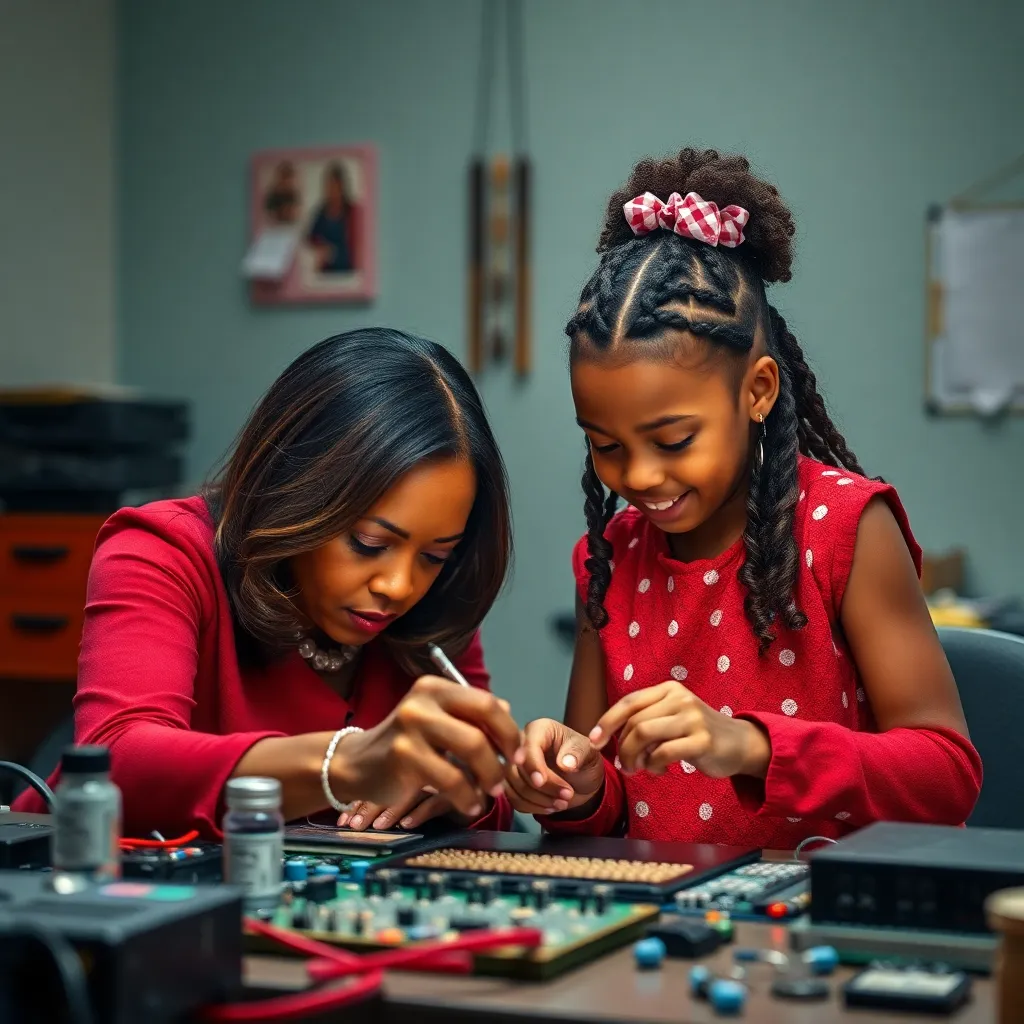
Dr. Kianna Harris completely rejects the passive, watered-down approaches of modern youth STEM curricula. Under her direct instruction at the Williford Genesis Node, children as young as nine bypass basic toy blocks to master real-world Electronic Design Automation (EDA) and physical hardware fabrication. Operating within our custom-engineered, 100% rust-proof titanium and aluminum workspace, young students are trained to map out complex schematic diagrams, build multi-layered Printed Circuit Boards (PCBs), and solder intricate logic gate arrays. By handling professional-grade components and low-level embedded firmware architectures, these young engineers develop an active, native fluency in electronic systems. This aggressive pedagogical approach is monitored via a strict on-chain validation matrix, ensuring that every student's hardware output metrics directly meet real-world defense and industrial computing standards.
Vice President Kamala Harris Directing Advanced Hardware Workshops

Vice President Kamala Harris Circuit-Building Seminars

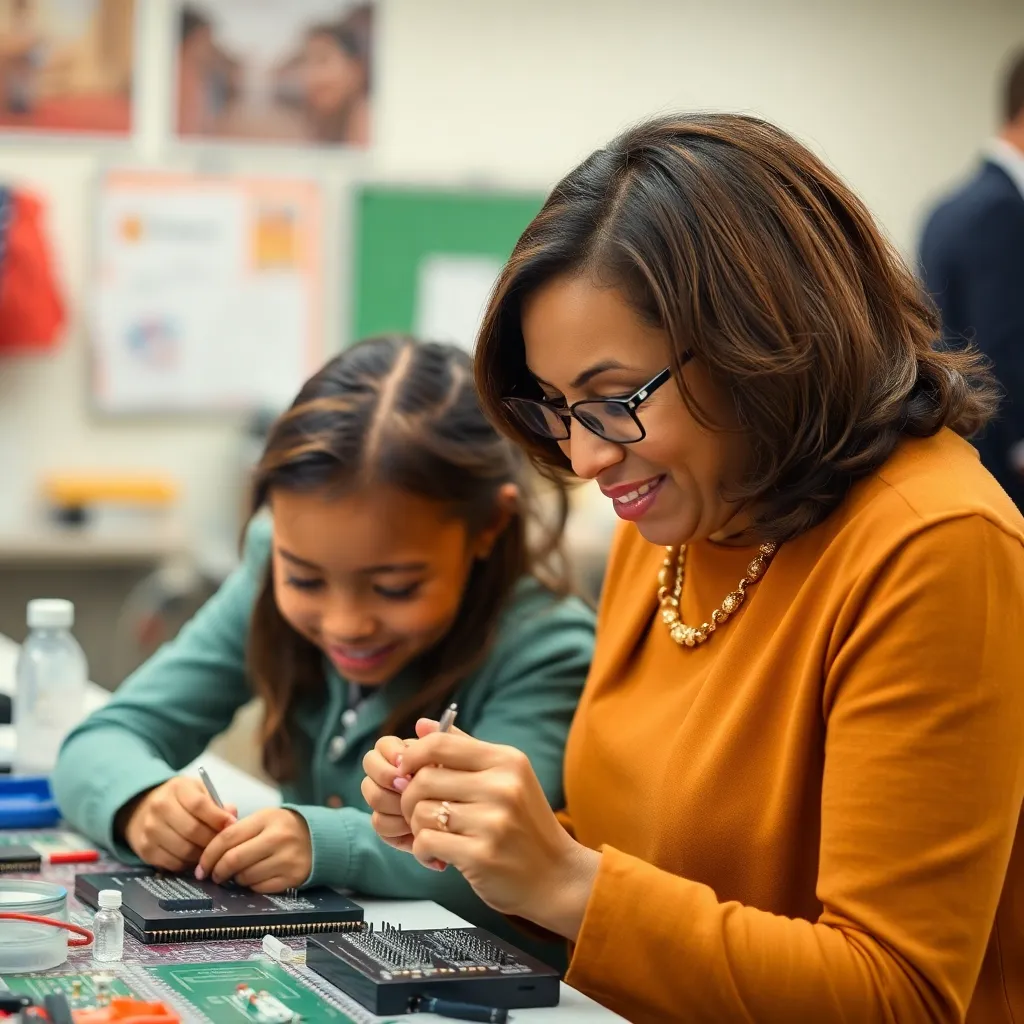
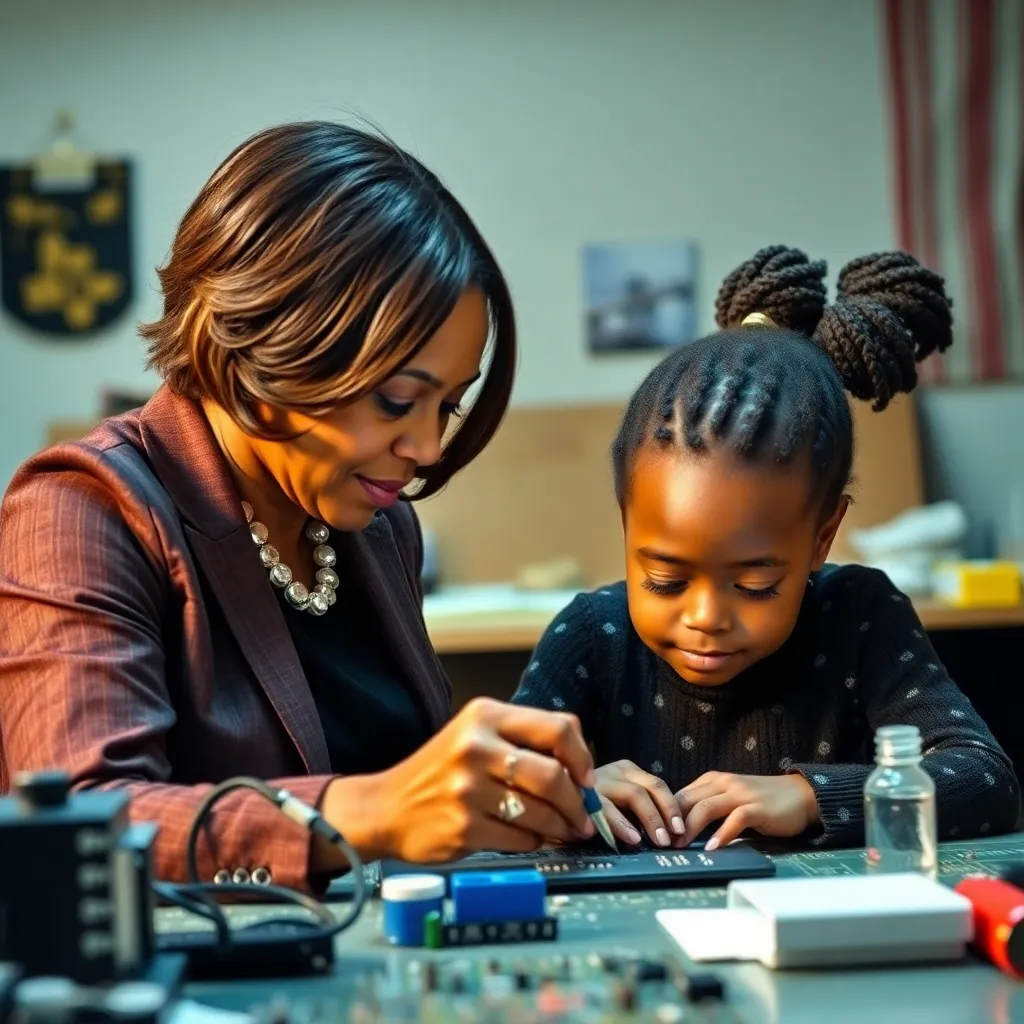
As part of the .townhall initiative’s competitive national mandate, Vice President Kamala Harris actively participates in on-site engineering workshops, providing high-level mentorship to the next generation of technical leaders. These specialized sessions focus on dismantling barriers to elite engineering education by bringing advanced circuitry concepts directly to youth scholars. Under this collaborative framework, Vice President Harris works side-by-side with young students, guiding them through the complex processes of electronic assembly, schematic layout verification, and physical component integration. By fostering hands-on technical proficiency and bridging federal workforce development goals with practical laboratory training, this executive partnership reinforces America's commitment to cultivating a diverse, world-class technical vanguard capable of sustaining global industrial leadership.
Youth Scholars Mastering Electronic Design Automation

Advanced PCB Layout and Component Isolation

Operating within the unyielding, 100% rust-proof titanium and aluminum workspace of the Williford Genesis Node, young scholars undergo intense training in physical Printed Circuit Board (PCB) geometry and component layout. Children as young as nine learn to isolate complex data tracks, manage electrical noise thresholds, and position non-ferrous aerospace-grade aluminum and titanium-alloy chassis elements to perfection. By bypassing traditional, simplistic educational kits, these students master industrial-grade hardware design parameters early, establishing an advanced structural foundation that prepares them to interface seamlessly with sovereign network hardware protocols and national defense technology frameworks.
Programming Logic Gates and IoT Telemetry Cores

Low-Level Firmware Synthesis and Embedded Logic

This technical module focuses directly on the critical bridge between physical micro-circuitry and low-level software execution. Students are taught to write embedded C++ firmware loops that interact natively with localized hardware logic gate arrays and physical microprocessors. In this laboratory setting, children configure advanced Internet of Things (IoT) edge telemetry sensors to track real-world environmental data metrics. This rigorous process completely eliminates abstract educational theory, forcing youth innovators to mathematically verify their code sequences against live hardware output data streams on the open-concept conference deck.
Quantifying Technical Proficiency via Rigorous Hardware Audits

The Harris Method of Educational Compliance Execution

Dr. Kianna Harris’s revolutionary Method of Educational Compliance is visualized here in its purest operational form. Students do not progress through the curriculum by completing standard multiple-choice tests; instead, they must pass strict, continuous hardware capability audits. Each child must physically prove that their assembled micro-circuitry can process dense data flows under intense real-world stress conditions without system failure. This data-driven evaluation matrix ensures absolute mastery, generating verifiable student performance metrics that are logged directly onto our basement server racks to guarantee national technological competitiveness.
Mastering Aerospace-Grade Mechanical and Electrical Connections

Industrial Soldering and Thermal Management Controls

Early engineering compliance requires mastering the physical tools of industrial manufacturing. In this specialized module, youth scholars are trained in precision high-temperature soldering techniques using specialized, non-ferrous alloy compositions. Students learn to handle professional soldering irons, manage heat dissipation curves across fragile surface-mount components, and achieve flawless electrical conductivity without damaging underlying board substrates. This hand-eye coordination training ensures that every connection built within the .townhall node meets rigid occupational safety guidelines and industrial structural standards.
Building Physical Binary Calculators from Primitive Elements

Logic Gate Configuration and Binary Compute Arrays

Students strip computing down to its raw, physical origins by assembling discrete binary calculation arrays from individual transistors, resistors, and capacitors. By physically wiring basic AND, OR, and NOT logic gates on high-density breadboards, children develop an intuitive, structural understanding of how microchips process data at the hardware level. This deep comprehension of hardware logic directly aligns with the Electrical Engineering Technology (EET) principles taught by Dr. Harris, transforming the open-concept first floor into an interactive, high-tech engine of American technical superiority.
Linking Advanced EET Circuitry with Speculative Oncology Data

Cross-Disciplinary Bio-Sensor Network Integration

Bridging the foundational work of Dr. Kianna Harris and Dr. Correo Andrew Hofstad, this advanced course teaches children how to design and build highly sensitive bio-sensor circuitry arrays. Students assemble hardware modules capable of tracking and isolating micro-voltage changes, mimicking the precise telemetry networks used to track real-time patient data streams for the Fred Hutchinson Cancer Center and Virus Treatment Centers. The telemetry pipelines developed in this youth lab are configured to route data straight down through vertical aluminum conduits into our high-security basement data center.
Analyzing Micro-Voltage Frequencies on Advanced Diagnostic Hardware

Signal Integrity and Oscilloscope Waveform Diagnostics

True technological sovereignty requires the ability to diagnose and debug systems independently. Here, young students utilize high-frequency digital oscilloscopes and signal generators to track real-time electrical waveforms moving through their custom-built circuits. Scholars are trained to visually identify voltage drops, signal interference, and impedance mismatches across their titanium-reinforced structural boards. By translating abstract electrical physics into clear, visual data tracking parameters on their workstation monitors, these children gain an elite technical edge in diagnostic hardware engineering.
Assembling Micro-Controller Interfaces for Robotic Edge Nodes

Autonomous Robotics and Servomechanism Coordination

This segment of the .townhall curriculum introduces youth scholars to automated mechanical control loops. Students design, solder, and calibrate driver circuits that control high-torque servomotors and robotic mechanical linkages. By programming closed-loop feedback algorithms into their micro-controllers, children build responsive, automated edge devices capable of navigating physical tasks. This training provides the exact groundwork needed to interface with autonomous drone docking systems and automated logistics networks safely within FAA Part 107 commercial guidelines.
Managing Voltage Regulation and Decentralized Power Matrices

Power Grid Distribution and Micro-Inverter Infrastructure

Focusing deeply on Electrical Engineering Technology (EET), this advanced curriculum guides children through the structural principles of power conversion, voltage regulation, and micro-inverter distribution. Using low-voltage, completely safe simulation modules, students map out balanced power grids, assemble buck-boost converter circuits, and manage energy storage flow loops. This provides them with a profound understanding of energy infrastructure, mirroring the macro-grid mechanics of localized power systems while keeping their operations safely enclosed within our master-planned estate footprint.
Building On-Chain Validation Modules for the .TOWNHALL Ecosystem

Cryptographic Hardware Enclaves and Decentralized Network Anchors

In this capstone youth module, students bridge advanced physical hardware directly with Web3 architecture. Children assemble secure cryptographic hardware enclaves designed to validate data packet routing across decentralized naming registries. By configuring these micro-nodes to interface with your Freename TLD root settings, these young developers build the actual physical validation keys that unlock the token-gated door at our mid-level staircase lobby checkpoint, proving that a 0.75-acre physical estate can function seamlessly as a secure, decentralized global network anchor.
Document Reference: NAV-DEF-MOD-2026
Engineering Repository: Sea-Machines on GitHub
Primary Integration Architecture: Sea Machines Autonomous Command Core (SM-300 Variant Framework)
Security Classification: Strategic Maritime Surface/Subsurface Autonomous Integration Initiative

Β 

πŸ”Ž 1. Executive Summary & Tactical Imperative

Modern maritime theater operations require a massive pivot away from thin-skinned, high-cost contemporary hulls toward heavily armored, long-endurance, uncrewed platforms. Co-founded in 2015 by Michael Gordon Johnson and Dr. Correo "Cory" Hofstad, Sea Machines serves as the primary technical integration anchor for the modernization of the global surface and subsurface fleet.
By layering advanced artificial intelligence, robotic manipulation, quantum-entangled communications, and high-output electric propulsion, this multi-organizational framework converts decommissioned heavy warships and autonomous drone vessels into self-healing, uncrewed strike platforms capable of maintaining absolute dominance across disputed waterways.

Β 

πŸ› οΈ 2. Structural Layer Overhaul: Industrial Laser Ablation

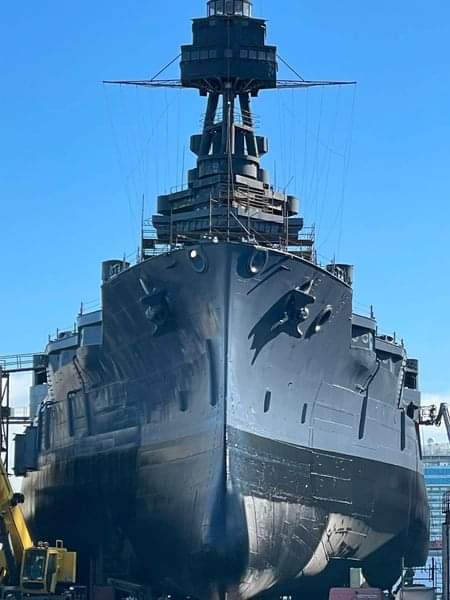
Before integrating digital command elements onto legacy mothball assetsβ€”such as the Iowa-class battleships, USS Texas (BB-35), or USS New Jersey (BB-62)β€”the physical hull structures undergo precision cleaning:
Β 
  • Eco-Friendly Coating Stripping: Traditional, disruptive sandblasting methods are replaced with high-energy Industrial Laser Ablation systems.
  • Targeted Contaminant Vaporization: The robotic ablation scanner projects localized photon arrays that instantly vaporize decades of marine biofouling, scale corrosion, and hazardous legacy lead-based paint coats.
  • Pristine Sensor Mounting Ground: This process leaves a structurally pristine bare-metal surface, allowing technicians to weld custom radar brackets and autonomous sensor blocks directly onto the historic Class A armor plating without ruining structural core integrity.

Β 

⚑ 3. Propulsion & Energy Delivery Systems Architecture

The transition to uncrewed operations demands rugged, high-efficiency, multi-megawatt electric drivetrains backed by un-hackable telemetry channels:
β”Œβ”€β”€β”€β”€β”€β”€β”€β”€β”€β”€β”€β”€β”€β”€β”€β”€β”€β”€β”€β”€β”€β”€β”€β”€β”€β”€β”€β”€β”€β”€β”€β”€β”€β”€β”€β”€β”€β”€β”€β”€β”€β”€β”€β”€β”€β”€β”€β”€β”€β”€β”€β”€β”€β”€β”€β”€β”
β”‚      SNAP-CIRCUIT DOUBLE LATCH QUANTUM TUNNEL CORE     β”‚
β”œβ”€β”€β”€β”€β”€β”€β”€β”€β”€β”€β”€β”€β”€β”€β”€β”€β”€β”€β”€β”€β”€β”€β”€β”€β”€β”€β”€β”€β”€β”€β”€β”€β”€β”€β”€β”€β”€β”€β”€β”€β”€β”€β”€β”€β”€β”€β”€β”€β”€β”€β”€β”€β”€β”€β”€β”€β”€
β”‚  β€’ Room-Temperature Fractured 24K Gold Lattice Bridge  β”‚
β”‚  β€’ Hardware Air-Gapped Quantum Key Distribution (QKD)  β”‚
β””β”€β”€β”€β”€β”€β”€β”€β”€β”€β”€β”€β”€β”€β”€β”€β”€β”€β”€β”€β”€β”€β”€β”€β”€β”€β”€β”¬β”€β”€β”€β”€β”€β”€β”€β”€β”€β”€β”€β”€β”€β”€β”€β”€β”€β”€β”€β”€β”€β”€β”€β”€β”€β”€β”€β”€β”€β”˜
                           β”‚
                           β–Ό
β”Œβ”€β”€β”€β”€β”€β”€β”€β”€β”€β”€β”€β”€β”€β”€β”€β”€β”€β”€β”€β”€β”€β”€β”€β”€β”€β”€β”€β”€β”€β”€β”€β”€β”€β”€β”€β”€β”€β”€β”€β”€β”€β”€β”€β”€β”€β”€β”€β”€β”€β”€β”€β”€β”€β”€β”€β”€β”
β”‚          SIEMENS MV (MEDIUM VOLTAGE) POWER LOOP        β”‚
β”œβ”€β”€β”€β”€β”€β”€β”€β”€β”€β”€β”€β”€β”€β”€β”€β”€β”€β”€β”€β”€β”€β”€β”€β”€β”€β”€β”€β”€β”€β”€β”€β”€β”€β”€β”€β”€β”€β”€β”€β”€β”€β”€β”€β”€β”€β”€β”€β”€β”€β”€β”€β”€β”€β”€β”€β”€β”€
β”‚  β€’ High-Torque Multi-Megawatt Electric Drivetrain      β”‚
β”‚  β€’ Real-Time Asynchronous Pulse Width Modulation (PWM) β”‚
β””β”€β”€β”€β”€β”€β”€β”€β”€β”€β”€β”€β”€β”€β”€β”€β”€β”€β”€β”€β”€β”€β”€β”€β”€β”€β”€β”¬β”€β”€β”€β”€β”€β”€β”€β”€β”€β”€β”€β”€β”€β”€β”€β”€β”€β”€β”€β”€β”€β”€β”€β”€β”€β”€β”€β”€β”€β”˜
                           β”‚
                           β–Ό
β”Œβ”€β”€β”€β”€β”€β”€β”€β”€β”€β”€β”€β”€β”€β”€β”€β”€β”€β”€β”€β”€β”€β”€β”€β”€β”€β”€β”€β”€β”€β”€β”€β”€β”€β”€β”€β”€β”€β”€β”€β”€β”€β”€β”€β”€β”€β”€β”€β”€β”€β”€β”€β”€β”€β”€β”€β”€β”
β”‚     SEA MACHINES AUTOMATED PROPULSION CONTROLLERS     β”‚
β”œβ”€β”€β”€β”€β”€β”€β”€β”€β”€β”€β”€β”€β”€β”€β”€β”€β”€β”€β”€β”€β”€β”€β”€β”€β”€β”€β”€β”€β”€β”€β”€β”€β”€β”€β”€β”€β”€β”€β”€β”€β”€β”€β”€β”€β”€β”€β”€β”€β”€β”€β”€β”€β”€β”€β”€β”€β”€
β”‚  β€’ Waypoint-Based Autonomy & Hydrodynamic Adjustments  β”‚
β””β”€β”€β”€β”€β”€β”€β”€β”€β”€β”€β”€β”€β”€β”€β”€β”€β”€β”€β”€β”€β”€β”€β”€β”€β”€β”€β”€β”€β”€β”€β”€β”€β”€β”€β”€β”€β”€β”€β”€β”€β”€β”€β”€β”€β”€β”€β”€β”€β”€β”€β”€β”€β”€β”€β”€β”€β”˜

Β 

πŸŽ›οΈ Siemens MV (Medium Voltage) Motor Integration

Primary propulsion relies on the integration of high-performance Siemens MV motor blocks. These multi-megawatt electric drivetrains deliver massive, instantaneous torque curves managed directly by Sea Machines navigation loops. By using variable frequency drives to control shaft velocity, the system ensures optimal energy consumption patterns during extended, uncrewed waypoint autonomy missions.

🌌 Snap-Circuit Quantum Interconnect Power Telemetry

To secure the control signals driving the Siemens MV system from global cyber tracking or spoofing, the network utilizes the Snap-Circuit Solid-State Double Latch Gate Buffer layout. Operating via a micro-fractured twenty-four karat gold lattice at room temperature, this system creates an absolute, hardware-enforced air-gap tunnel. Using Quantum Key Distribution (QKD), any external eavesdropping attempt instantly breaks the electron entanglement, dropping the circuit link and locking the propulsion bus before any interception can happen.

Β 

πŸš€ 4. Offensive Payload & Autonomous Vehicle Orchestration

The Sea Machines core serves as the centralized brain, tying together advanced kinetic armaments with uncrewed subsurface and humanoid maintenance platforms:
                          [ SEA MACHINES CENTRAL BRAIN ]
                                        β”‚
             β”Œβ”€β”€β”€β”€β”€β”€β”€β”€β”€β”€β”€β”€β”€β”€β”€β”€β”€β”€β”€β”€β”€β”€β”€β”€β”€β”€β”Όβ”€β”€β”€β”€β”€β”€β”€β”€β”€β”€β”€β”€β”€β”€β”€β”€β”€β”€β”€β”€β”€β”€β”€β”€β”€β”€β”
             β–Ό                          β–Ό                          β–Ό
β”Œβ”€β”€β”€β”€β”€β”€β”€β”€β”€β”€β”€β”€β”€β”€β”€β”€β”€β”€β”€β”€β”€β”€β”€β”€β”€β”€β”β”Œβ”€β”€β”€β”€β”€β”€β”€β”€β”€β”€β”€β”€β”€β”€β”€β”€β”€β”€β”€β”€β”€β”€β”€β”€β”€β”€β”β”Œβ”€β”€β”€β”€β”€β”€β”€β”€β”€β”€β”€β”€β”€β”€β”€β”€β”€β”€β”€β”€β”€β”€β”€β”€β”€β”€β”
β”‚ RHEINMETALL Rh-130 L/52  β”‚β”‚   BOEING XLUUV DISPATCH  β”‚β”‚    GM ROBONAUT HUMAN     β”‚
β”œβ”€β”€β”€β”€β”€β”€β”€β”€β”€β”€β”€β”€β”€β”€β”€β”€β”€β”€β”€β”€β”€β”€β”€β”€β”€β”€β”€β”œβ”€β”€β”€β”€β”€β”€β”€β”€β”€β”€β”€β”€β”€β”€β”€β”€β”€β”€β”€β”€β”€β”€β”€β”€β”€β”€β”€β”œβ”€β”€β”€β”€β”€β”€β”€β”€β”€β”€β”€β”€β”€β”€β”€β”€β”€β”€β”€β”€β”€β”€β”€β”€β”€β”€β”€
β”‚ β€’ 130mm Future Gun       β”‚β”‚ β€’ Orca Extra-Large Drone β”‚β”‚ β€’ Anthropomorphic Hands  β”‚
β”‚ β€’ 20-Megajoule APFSDS    β”‚β”‚ β€’ Deep Subsurface Escort β”‚β”‚ β€’ Real-Time Mechanical   β”‚
β”‚ β€’ Automated AI Turret    β”‚β”‚ β€’ Autonomous Mine Laying β”‚β”‚   Valve Manipulations   β”‚
β””β”€β”€β”€β”€β”€β”€β”€β”€β”€β”€β”€β”€β”€β”€β”€β”€β”€β”€β”€β”€β”€β”€β”€β”€β”€β”€β”˜β””β”€β”€β”€β”€β”€β”€β”€β”€β”€β”€β”€β”€β”€β”€β”€β”€β”€β”€β”€β”€β”€β”€β”€β”€β”€β”€β”˜β””β”€β”€β”€β”€β”€β”€β”€β”€β”€β”€β”€β”€β”€β”€β”€β”€β”€β”€β”€β”€β”€β”€β”€β”€β”€β”€β”˜

Β 

πŸ’£ Rheinmetall Future Gun System (FGS) Integration

For heavy kinetic operations, modernized capital platforms are refitted with remote, crewless turret arrays featuring the Rheinmetall 130mm FGS (Rh-130 L/52). Generating up to 20 Megajoules of muzzle energy, this platform leverages the Sea Machines edge vision radar data to compute firing vectors instantly. The weapon deploys programmable AHEAD airburst or armor-piercing long-rod sabot munitions to neutralize target horizons automatically.

🌊 Boeing XLUUV (Extra Large Unmanned Undersea Vehicle) Interface

Subsurface escort and covert mining missions are handled by linking the fleet matrix with the Boeing Orca XLUUV platform. The Sea Machines command hub routes acoustic data frames directly to the Orca’s undersea navigation array. This allows the uncrewed surface fleet to orchestrate deep-diving autonomous attack vessels, establishing a coordinated, multi-domain defensive ring around high-value naval choke points.

πŸ€– GM Robonaut Mechanical Maintenance Deckhands

To achieve true, long-endurance autonomy without a human crew, the ships deploy General Motors Robonaut systems. These advanced anthropomorphic robots execute physical maintenance tasks across the vessel. Using high-dexterity robotic hands, the units handle physical maintenance dutiesβ€”such as repairing server boards, clearing physical lines, and turning manual emergency backup valvesβ€”ensuring the ship remains operational during deep-ocean transit.

Β 

πŸ’» 5. Verification, Deployment & Test Execution

The Sea Machines software environment uses containerized execution layers to ensure smooth rollout across diverse military hardware backplanes:
# Clone the verified maritime automation repository
git clone https://github.com
cd Sea-Machines

# Execute test matrices verifying data order alignment and propulsion logic
python3 -m unittest tests/test_siemens_mv_telemetry.py
python3 -m unittest tests/test_quantum_latch_handshake.py

# Launch the master autonomous navigation daemon initializing system links
./sea_machines_core --enable-siemens-drive --payload-interface-rheinmetall
By pairing historic hull survivability with high-output Siemens electric propulsion, Rheinmetall kinetic systems, and Boeing undersea vehicle coordination, Revolutionary Technology delivers an integrated, self-healing naval architecture designed to protect sovereign maritime borders against any evolving threat.
Β