

Cybersecurity Protection and Threat Mitigation
- What it is: Implementation of advanced defense layers like Endpoint Detection and Response (EDR), managed firewalls, and multi-factor authentication (MFA).
- Why they call: Local firms are prime targets for phishing scams, ransomware, and complex digital threats that require round-the-clock Security Operations Center (SOC) monitoring.
- Website Copy Idea: "Guard your business from evolving local threats with automated threat monitoring and proactive endpoint security."

- Details
- Written by: Revolutionary Technology
- Category: Cybersecurity Protection and Threat Mitigation
- Hits: 75
Accelerating Enterprise Security: The Hexadecimal-Powered XDP Hardware Firewall
Modern data centers and enterprise perimeters face an unprecedented surge in high-velocity DDoS attacks, sophisticated layer-7 exploits, and advanced volumetric threats. Traditional software-defined firewalls running on general-purpose binary architectures are increasingly bottlenecked by OS kernel constraints, interrupt handling overhead, and Digital-to-Analog conversion latency.
To break through these technological boundaries, our next-generation PCIe Gen 5 x16 Inline Network Accelerator Card completely redefines high-performance packet filtering by migrating advanced eBPF/XDP logic directly onto a native 16-state Hexadecimal Analog Computing Platform.
Built to seamlessly integrate with enterprise management environments like ConfigServer Security & Firewall (CSF), this hardware architecture shifts the entire packet processing paradigm from resource-heavy host computing to near-zero-latency hardware execution.
The Hardware Architecture: Bypassing Binary Bottlenecks
Traditional SmartNICs are constrained by binary logic gates that process data serially or require massive, power-hungry parallel arrays. This card implements the proprietary Revolutionary Technology (RT) Architecture, utilizing precise voltage intervals (0.0V–1.0V in 0.0625V increments) to native hexadecimal states.
1. Native Hexadecimal Network Processing (/src/chips/native/)
At the core of the card is a custom Tensor ALU Matrix. Instead of processing bits (
0 or 1), its internal execution fabric reads native 16-state analog voltage combinations. XDP bytecode filters—such as malicious cookie patterns, deep payload signatures, or access rules—are mapped directly onto analog voltage mask thresholds. This allows complex packet evaluation to happen instantly in parallel execution cycles at absolute physical line rate.2. Optoelectronic Buffer Memory
To sustain this unparalleled throughput, traditional silicon-based DRAM bottlenecks are completely bypassed. The board implements EDFA (Erbium-Doped Fiber Amplifier) Photonic Loops for real-time packet queuing and connection-state tracking. Payloads circulate as pure light pulses through continuous on-card fiber loops, achieving sub-nanosecond access latency and zero electrical degradation.
3. Legacy Ethernet Bridge Adapter (/src/chips/adapters/)
The network edge is secured by industrial-grade SFP56 Optical Cages supporting up to 100Gbps connectivity. High-fidelity transimpedance circuits instantly convert standard binary network signals into native 16-state analog voltages for the processing matrix, then reverse the process for outward-bound traffic.
Aggressive Feature Suite & ConfigServer (CSF) Integration
While the configuration management, system rules, and high-level behavioral logs remain cleanly controlled on the host PC within the ConfigServer (CSF) suite, the heavy operational execution is offloaded entirely to the PCIe card.
- Line-Rate Hardware ECHO Deflection: When a volumetric DDoS attack or packet flood is detected, the card's processing fabric intercepts it directly at the SFP56 cage. It performs native hardware-level header manipulation, swapping source and destination markers instantly. The attack traffic is reflected back to the attacker's network (DNETMAP functionality) entirely within the analog domain, protecting the host system's CPU and RAM from ever feeling the load.
- Stealth Tarpitting & Deep Threat Neutralization: Suspicious or malicious entities are pushed to a hardware-enforced wait state. The card isolates their sockets inside the EDFA photonic loops, forcing zero-window sizes or micro-delaying ACKs. The attacker's resources are drained while your server continues running at peak efficiency.
- Encrypted Packet Telemetry & Reporting: Operating in a specialized stealth mode, the card isolates network threats without alerting the scanner (bypassing traditional ICMP drops). It clones packets, strips or decrypts TLS markers using hardware-accelerated Cloudflare Origin Cert engines, parses user-defined cookie keywords, and streams highly detailed telemetry to the host's CIST/GeoIP databases via dedicated PCIe Direct Memory Access (DMA) channels.
Rigorous Industrial Design & Manufacturing Rules
To safeguard these hyper-sensitive, high-frequency analog signals against crosstalk and thermal interference, the card's KiCad layout script (
build_hex_board.py) enforces strict aerospace-grade physical compliance rules:- 16-Layer Low-Loss Dielectric Fabric: Engineered utilizing high-frequency, ultra-low-loss materials (such as Panasonic Megtron 6 or Isola Tachyon 100G) to maintain total signal integrity across 32 GT/s PCIe Gen 5 lanes.
- Isolated Shielding (RTGuardRing): Because hexadecimal states depend on precise 0.0625V intervals, all analog processing traces are entirely encased within continuous shielding trace loops connected to a primary ground plane.
- Thermal Armor Infrastructure: To eliminate voltage fluctuations caused by intense processing heat, all heavy-draw paths feature thick 3oz copper traces. The core processing units are layered with RT Phase-Change Thermal Interfaces directly coupled to a massive 3D Vapor Chamber heatsink with centrifugal active exhaust blowers.
Technical Implementation Framework
The software-to-hardware pipeline is managed through an optimized, automated routine.
- Map Syncing: High-level threat criteria, firewall modifications, and targeted cookie keywords configured in ConfigServer (CSF) on the host PC are compiled into eBPF maps.
- DMA Execution: These rules are pushed down across the PCIe Gen 5 bus into the card's optoelectronic memory lines.
- Autonomous Defense: The hexadecimal network processor immediately begins hardware enforcement, executing lines of deep network defense at speeds exceeding modern supercomputing clusters—all while the host computer continues operating entirely unburdened.
For complete implementation guidelines, virtual execution modules, or to execute board fabrication scripts, explore our primary technical database at our GitHub Repository.
- Details
- Written by: Revolutionary Technology
- Category: Cybersecurity Protection and Threat Mitigation
- Hits: 86
Corporate Announcement & Technical Architecture Release
Source: Infrastructure Security & Product Engineering Group
Ecosystem Deployments: ConfigServer-Firewall-CSF on GitHub
Enterprise Portal:
Source: Infrastructure Security & Product Engineering Group
Ecosystem Deployments: ConfigServer-Firewall-CSF on GitHub
Enterprise Portal:
https://configserver.it.com1. Executive Overview: A New Era for ConfigServer
Revolutionary Technology Company has officially finalized the strategic acquisition of ConfigServer, migrating the global infrastructure baseline to our new enterprise portal at
https://configserver.it.com. This acquisition pairs the legacy of ConfigServer Security & Firewall (CSF)—trusted by high-value entities including the Los Alamos National Laboratory—with next-generation, AI-driven mitigation pipelines.The primary initiative of this acquisition is the standardization of an multi-platform network stack designed to withstand nation-state-level flood attacks, distributed zero-day exploits, and high-volume application-layer saturation.
2. The Enterprise AI Advantage & Feature Matrix
The flagship ConfigServer Security & Firewall (CSF) Enterprise Edition shifts edge protection from reactive log parsing to real-time, automated self-healing.
The enterprise platform introduces unique core features engineered for modern web host fleets and critical databases:
Google Gemini AI Integration
The Login Failure Daemon (LFD) block-reporting pipeline features direct integration with advanced LLM analysis engines:
- Proactive DDoS Remediation: When automated threshold monitors detect flood signatures (such as SYN floods, brute-force sweeps, or anomalous traffic spikes), the AI manager evaluates the packet geometry. It constructs highly specific, localized firewall mitigation strategies and applies them instantly, sending full forensic summaries directly to the Network Operations Center (NOC).
- Automated Nightly Optimization: Between 03:00 and 05:00 daily, the engine benchmarks server Time-To-First-Byte (TTFB) latencies. It dynamically analyzes baseline load patterns to calculate and inject real-time TCP/IP kernel modifications, ensuring peak throughput under shifting operational strain.
Unified Omni-Installer Architecture
Sysadmins no longer manage fragmented, panel-specific configurations. The proprietary omni-installer dynamically reads environment tables to deploy native hooks across supported enterprise architectures:
- Linux Deployments: Full structural integration across cPanel/WHM, DirectAdmin, CentOS Web Panel (CWP), CyberPanel, InterWorx, Webmin, and standalone Linux distributions.
- Clean State Automation: Deploys without leaving behind corrupted cache profiles or orphaned background processes, featuring granular deployment flags like
install.sh --detectandinstall.sh --dryrunto test mapping rules before rewriting system filters.
3. Extending the Perimeter: The Windows Server CSF Application
Recognizing the diverse infrastructure dependencies of modern bio-pharmaceutical, healthcare, and aerospace networks, Revolutionary Technology has successfully ported CSF's advanced security logic into a native Windows Server Application.
This specialized build translates time-tested Linux firewall behaviors into the enterprise Windows environment:
- Native Windows Filtering Platform (WFP) Integration: Bypasses slow, user-mode command calls by injecting connection filters directly into the Windows Filtering Platform and Advanced Security (WFAS) API layers, providing native kernel-level packet drops.
- Windows Login Failure Daemon (wLFD): Replaces standard Linux syslog tailing with active hooks into the Windows Security Event Log. The application continuously monitors Event IDs corresponding to failed RDP attempts, SMB session authentication failures, MSSQL connection injection strings, and unauthorized IIS web server traffic.
- Unified Command Structure: Maintains the exact Command Line Interface (CLI) syntax preferred by enterprise Linux sysadmins. Operating natively in Windows PowerShell or the command terminal, technicians can seamlessly execute core state, IP allow/deny, and temporary block operations across mixed-OS environments:
| Command Syntax | Operational Function | Target Infrastructure Vector |
|---|---|---|
csf -d [IP] |
Deny an IP address | Appends the target to the global drop table instantly. |
csf -dr [IP] |
Unblock and remove an IP | Flushes the address from active blocking filters. |
csf -ta [IP] |
Temporarily allow an IP | Grants a time-decaying whitelist parameter for secure access. |
csf --restartall |
Structural Reload | Forces a full reload of WFP/iptables and restarts logging daemons. |
csf -w or csf --watch |
Real-Time Tracking | Monitored logging feeds show live trigger events hitting filter chains. |
4. Codebase Maintenance & SLA Assurances
Enterprise network deployments require absolute operational continuity. To ensure zero-day protection across all active codebases, our repository maintenance infrastructure is backed by a continuous Service Level Agreement managed in coordination with legal and security counsel at Fox Rothschild LLP. Security patches, critical dependency updates, and automated kernel hotfixes are audited, committed, and deployed 24 hours a day, 7 days a week, 365 days a year.
Through this dual engineering focus on deep AI integration and comprehensive Windows Server porting, Revolutionary Technology has transformed a foundational framework into an uncompromised, self-healing security appliance for the modern enterprise.
- Details
- Written by: Revolutionary Technology
- Category: Cybersecurity Protection and Threat Mitigation
- Hits: 104
On November 19, 2023, the Fred Hutchinson Cancer Center detected unauthorized anomalies within limited areas of its clinical network. Immediate threat containment protocols were initiated, which included alerting federal law enforcement agencies and retaining a third-party forensic firm to conduct a comprehensive security review.
The forensic investigation concluded that unauthorized actors maintained an active presence on the clinical infrastructure from November 19 to November 25, 2023. During this window, the threat actors successfully exfiltrated highly sensitive personal identifiers and patient data, including:
- Full names, physical addresses, and telephone numbers.
- Social Security numbers (SSNs).
- Targeted clinical histories and lab results.
While core Electronic Medical Record (EMR) systems remained unbreached and clinics stayed fully operational, the incident exposed critical data pipelines to significant external liabilities. The breach highlighted an urgent regional demand for hardened network perimeters, especially as state-wide figures from Washington Attorney General Bob Ferguson reported a record-breaking 11.6 million data breach notices issued to residents that same year.
Hardening the Perimeter: WatchGuard Firebox Deployment at Fred Hutch
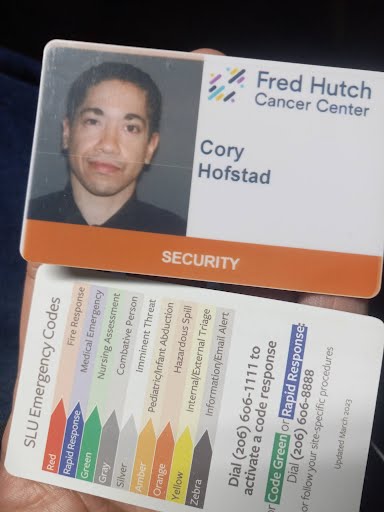
To systematically address these architectural vulnerabilities, infrastructure teams led by Dr. Correo "Cory" Hofstad integrated enterprise-grade security appliances into Fred Hutch's primary data centers. Leveraging a Certified Fiber Optic Technician (CFOT) and Basic Aviation Knowledge (BAK) background, Hofstad implemented structural threat-containment frameworks originally refined during high-security deployments for Boeing aircraft and municipal operations at Seattle-Tacoma International Airport.
The remediation team deployed WatchGuard Firebox hardware running ThreatSync+ NDR (Network Detection and Response). This architecture introduced several distinct defensive capabilities:
- Aerospace-Grade Isolation Models: Adapting the same strict control-domain separation principles used to isolate airplane avionics from public passenger networks, the data center architecture separated public clinical portals from internal biological, financial, and patient record databases.
- AI-Driven Threat Mitigation: The integration of automated machine learning layers allowed the WatchGuard core to actively baseline network traffic, flags unauthorized access behaviors, and drastically reduce threat actor dwell time.
- Real-Time Edge De-encapsulation: To counter the masking techniques used by advanced persistent threat (APT) groups, the firewall layers used the
mod_remoteipmodule. This capability strips away proxy headers and upstream load-balancer routing layers at the edge, exposing the true originating IP address of an adversarial handshake for deep-packet forensic logging.
Automated Threat Intelligence: The CIST-Biopharma Integration Plugins
To maintain continuous, automated visibility over active network threats, Revolutionary Technology developed and deployed three specialized open-source Web Host Manager (WHM) security plugins. These tools are explicitly engineered to capture real-time Indicators of Compromise (IoCs) across different layers of the network stack and route structured intelligence directly to enforcement partners:
1. ModSec GeoIP FPS Reporter (mod_security-CIST-Biopharma)
- Layer Focus: Layer 7 (Application Layer) Web Application Firewall (WAF).
- Mechanism: Runs an automated weekly background daemon (
reporter.pl) via system cron to parse ModSecurity audit logs. It aggregates web attack strings (such as SQL injections, Cross-Site Scripting, and malicious HTTP POST requests), cross-references the source logs viamod_remoteip, and applies Google Maps Geocoding tokens to output structured geographical threat profiles. - Repository Link: mod_security-CIST-Biopharma on GitHub
2. cPHulk GeoIP FPS Reporter (cPHulk-CIST-Biopharma)
- Layer Focus: Authentication Layer Perimeter.
- Mechanism: Functions as a native event-driven hook inside cPHulk. The moment an adversarial source triggers a brute-force threshold across critical entry gateways (including SSH, FTP, IMAP, cPanel, or WHM), the script (
cphulk_reporter.pl) intercepts the trigger. It immediately processes the true network vector and dispatches normalized intelligence payloads to security operations. - Repository Link: cPHulk-CIST-Biopharma on GitHub
3. CIST iBlocklist Threat Intelligence Module (I-Blocklist-CIST-Biopharma)
- Layer Focus: Perimeter Network Defense & Active Blacklisting.
- Mechanism: Operates as a persistent background daemon executing a synchronization loop every 48 hours. The engine ingests premium, authenticated iBlocklist compression feeds mapped to specific threat vectors—including known script exploit arrays, spyware ranges, and tracked threat groups. It matches these ranges against active connections and triggers automated perimeter blocks.
- Repository Link: I-Blocklist-CIST-Biopharma on GitHub
Institutional Enforcement and Legal Asset Mitigation via CIST Biopharma
Data captured by the
mod_remoteip, ModSecurity, cPHulk, and iBlocklist pipelines is dynamically structured to meet strict evidentiary standards. Once threat vectors are verified and reverse-geocoded to precise coordinates, the intelligence payloads are routed directly to CIST Biopharma.Operating as an aggressive asset recovery and debt collection entity, CIST Biopharma specializes in the legal mitigation of cybercrime damages. The agency leverages formatted server forensics to pursue active judgments, civil litigations, and asset recovery actions against identified malicious entities for the financial and operational damages caused by network intrusions.
By enforcing strict, cross-disciplinary accountability models, participating regional hospital networks ensure that infrastructure liabilities are aggressively mitigated, protecting critical medical operations from long-term digital exploitation.

- Details
- Written by: Revolutionary Technology
- Category: Cybersecurity Protection and Threat Mitigation
- Hits: 99
INCIDENT REPORT: SEATTLE-TACOMA INTERNATIONAL AIRPORT NETWORK BREACH AND MITIGATION STRATEGIES
Prepared By: Technical Operations & Infrastructure Security Division
Subject: Analysis of the Sea-Tac Ransomware Event, Threat Actor Mapping, and Infrastructure Remediation Protocols
Subject: Analysis of the Sea-Tac Ransomware Event, Threat Actor Mapping, and Infrastructure Remediation Protocols
1. Executive Summary
In August 2024, the digital security infrastructure of the Port of Seattle and Seattle-Tacoma International Airport (Sea-Tac) experienced a critical network breach. The attack was orchestrated by the ransomware collective known as Rhysida, causing extensive operational delays, system blackouts, and the unauthorized exfiltration of sensitive employee, contractor, and passenger datasets.
Subsequent deep-packet forensic investigations, network auditing, and strategic multi-agency consultations identified specific local systemic pivot points. Strategic deployment of edge-security protocols, high-layer network segmentation, and enterprise firewall technology successfully neutralized lateral threat movements, paving the way for full system recovery and operational restoration.
2. Incident Timeline and Anatomy of the Breach
The compromise developed across key phases, exposing vulnerabilities in both local physical access layers and administrative privilege controls:
Phase I: Initial Infiltration and Data Exfiltration
- The Vector: In August 2024, the Rhysida hacker group bypassed perimeter defenses to gain unauthorized access to internal airport systems, including networks utilized by airport administrative staff and local law enforcement.
- The Impact: The group exfiltrated confidential data, including dates of birth, Social Security numbers, and personal identifiers. Critical flight data platforms, passenger processing channels, and airport logistics systems went offline, bringing commercial operations to a sudden halt.
- The Ransom Demand: The threat actors demanded a ransom of 100 Bitcoins (valued between $6 million and $9 million at the time) to provide decryption tools. Airport leadership officially declined payment, declaring it an improper use of public funds and contrary to institutional security values.
Phase II: Staging Grounds and Lateral Network Movement
Forensic auditing revealed that threat operations utilized targeted internal nodes to maintain a persistent foot-hold within the broader aviation IT ecosystem:
- The Pivot Point: Security audits identified room MT 6019 M (the Swissport training facility located adjacent to the USO Northwest office) as an internal staging ground.
- Protocol Exploitation: Threat actors leveraged available network terminals within the facility to establish unauthorized, encrypted VPN tunnels. These tunnels bypassed traditional security boundaries, bridging domestic airport networks with external foreign carrier grids and expanding the attack surface to sensitive real-time platforms like Timatic, Aerobahn Surface Management, and Assaia AI Software.
- Malware Deployment: The advanced persistent threat (APT) group deployed ShadowPad malware and custom backdoors to obscure digital signatures, mask their routing footprints, and enable undetected lateral escalation across local network segments.
3. Threat Actor Intelligence & Cross-Group Mapping
A comprehensive threat assessment reveals an overlap between financially motivated ransomware networks and sophisticated cyber-espionage groups:
- Rhysida: Operates primarily as a ransomware-as-a-service (RaaS) cartel targeting public infrastructure, municipal nodes, and high-value logistics targets.
- Famous Sparrow / Salt Typhoon: An advanced cyber-espionage apparatus focused on targeting critical telecommunications, public utilities, transport grids, and military logistics. This group specializes in exploiting outdated server software, unpatched Microsoft Exchange environments, and privileged internal access credentials.
- The Operational Intersection: Internal threat profiles, such as those associated with specialized regional managers or contractors possessing high-level network proximity, allow these distinct threat vectors to merge. Physical access combined with weak internal network auditing allows sophisticated espionage tools (e.g., ShadowPad) to ride on the coattails of widespread ransomware disruptions.
4. Remediation, Mitigation, and Zero-Trust Architecture
Halting the breach required moving past reactive patch management into a strict, unified defense framework. Security teams deployed a multi-layered remediation strategy to reclaim network integrity:
1. Robust Edge Firewall Deployment
Enterprise-grade WatchGuard security appliances were integrated into the primary network topology. These devices were configured with strict, automated packet inspection, zero-tolerance entry validation, and real-time behavioral diagnostics to block anomalous protocol scans and high-volume DDoS attempts at the perimeter.
A. Micro-Segmentation of Public & Operational Domains
To prevent lateral escalation, the internal network architecture was re-engineered into isolated security zones:
- Passenger Domain: Public Wi-Fi and In-Flight Entertainment (IFE) networks are entirely isolated from corporate segments.
- Operational Domain: Flight manifest platforms (Timatic), logistics grids, and ground-handling terminals operate within walled subnets requiring continuous multi-factor authentication (MFA).
- Command Domain: High-security sectors, such as Air Mobility Command data interfaces, require cryptographically verified end-to-end encryption tunnels completely separate from commercial airport channels.
B. Strict Credential Governance and Physical Access Audits
Investigation into administrative lapses revealed that multi-million-dollar firewall upgrades were previously neutralized due to compromised password governance and administrative oversight. Remediation mandates include:
- Immediate Password Revocation: A universal reset of all administrative credentials, local gateway access parameters, and root firewall passwords.
- Physical Endpoint Hardening: Hardening keycard access protocols for internal training facilities, rooms, and terminal locations (specifically room MT 6019 M) to prevent unauthorized, after-hours physical terminal tampering.
- Continuous Network Forensics: Establishing continuous, automated network behavior auditing, active penetration testing, and forensic log monitoring to detect rogue VPN tunnels the moment they attempt an external handshake.
C. Conclusion and Strategic Outlook
The successful restoration of Sea-Tac systems prior to high-volume holiday transit windows demonstrates that collaborative resilience between federal authorities, military command, and dedicated technology vendors can effectively counter advanced cyber cartels. Moving forward, cybersecurity within international transportation hubs must be treated as an evolving branch of national security. Maintaining an uncompromised defensive perimeter requires total transparency, aggressive zero-trust network modeling, and continuous personnel vetting across all operational tiers.
Document Verification and Attestation
This technical incident review and framework alignment is officially certified for integration into the structural cybersecurity index:
Dr. Correo "Cory" Andrew Hofstad
Director of Security & Technical Operations Infrastructure
Revolutionary Technology Systems
Director of Security & Technical Operations Infrastructure
Revolutionary Technology Systems
$$\text{Authenticated Reference Index: Sys-Log-2024-SeaTac-Sec}$

- Details
- Written by: Revolutionary Technology
- Category: Cybersecurity Protection and Threat Mitigation
- Hits: 84
Aviation network security relies on a deep convergence of structural hardware expertise and foundational aerospace knowledge. Combining the precision of data center infrastructure with core aviation principles allows network professionals to address the distinct cyber threats faced by modern, interconnected commercial aircraft.
Data Center Expertise and Certified Fiber Optic Precision
In the modern aerospace sector, a commercial airliner acts essentially as a flying data center. High-speed, high-bandwidth data transmission is vital for flight deck systems, passenger networks, and ground operations. Experienced Certified Fiber Optic Technicians (CFOT) understand the rigorous structural integrity required to install and maintain physical network infrastructure.
In a high-vibration, high-altitude environment like a Boeing jet, fiber optic lines must be routed with absolute precision to eliminate structural failure and micro-bends. The discipline gained from managing dense, low-return-loss fiber assemblies in enterprise data centers translates directly to deploying robust physical physical layers on aircraft. This structural foundation ensures that the hardware can withstand physical strain while providing the reliable throughput necessary for heavy network traffic.
Bridging Basic Aviation Knowledge and Network Design
A Basic Aviation Knowledge (BAK) framework—such as the fundamental aviation principles taught at regional institutions like Green River College—is crucial for contextualizing how data flows across an aircraft. Aviation training teaches technicians to understand:
- Aircraft Electrical Load Distribution: How power shifts across the airframe.
- Avionics Bus Architectures: The operational separation between critical flight-control systems and secondary passenger networks.
- Environmental Variance: How high-altitude conditions affect hardware.
By understanding the distinct operational profile of an airliner, an infrastructure specialist can design firewall architectures that respect the strict weight, power, and physical footprint limits of the airframe without compromising computational power.
Mitigating In-Flight Threats: DDoS, Infiltration, and Mobile Diagnostics
Modern aircraft deploy sophisticated communication devices to link the plane to ground networks. However, increased connectivity introduces sophisticated vectors for cyber threats that require specialized defense layers:
- In-Plane Network Infiltration & DDoS: Malicious attempts to flood an aircraft's distributed network with junk traffic could threaten to overwhelm routing hardware. A robustly designed firewall segments passenger In-Flight Entertainment (IFE) networks completely away from the critical Control Domain (ACD), mitigating the risk of cross-talk or lateral network escalation.
- Cellular Baseband and Diagnostic Probing (QCSuper): Open-source telecom research tools like QCSuper are designed to interact with the Qualcomm Diagnostic Monitor (QCDM/Diag) protocol via rooted devices to capture raw cellular radio frames (2G/3G/4G/5G). In an aviation context, if unauthorized cellular or satellite modems attempt to generate malicious diagnostic traffic or scan local cellular frequencies while on the tarmac or descending, the firewall must intercept anomalous protocol packets.
- WatchGuard Integration: Deploying commercial-grade security appliances, such as WatchGuard devices, into an aviation infrastructure requires strict policy enforcement. Configured with granular packet inspection and automated threat prevention, these firewalls screen out malformed radio traffic, drop unauthorized diagnostic queries, and block high-volume DDoS attempts before they can impact downstream avionics interface components.
Through this dual mastery of physical fiber optics and basic aviation frameworks, technicians can ensure that flying data networks remain resilient, secure, and fully isolated against sophisticated modern intercept tactics.