

On November 19, 2023, the Fred Hutchinson Cancer Center detected unauthorized anomalies within limited areas of its clinical network. Immediate threat containment protocols were initiated, which included alerting federal law enforcement agencies and retaining a third-party forensic firm to conduct a comprehensive security review.
The forensic investigation concluded that unauthorized actors maintained an active presence on the clinical infrastructure from November 19 to November 25, 2023. During this window, the threat actors successfully exfiltrated highly sensitive personal identifiers and patient data, including:
- Full names, physical addresses, and telephone numbers.
- Social Security numbers (SSNs).
- Targeted clinical histories and lab results.
While core Electronic Medical Record (EMR) systems remained unbreached and clinics stayed fully operational, the incident exposed critical data pipelines to significant external liabilities. The breach highlighted an urgent regional demand for hardened network perimeters, especially as state-wide figures from Washington Attorney General Bob Ferguson reported a record-breaking 11.6 million data breach notices issued to residents that same year.
Hardening the Perimeter: WatchGuard Firebox Deployment at Fred Hutch
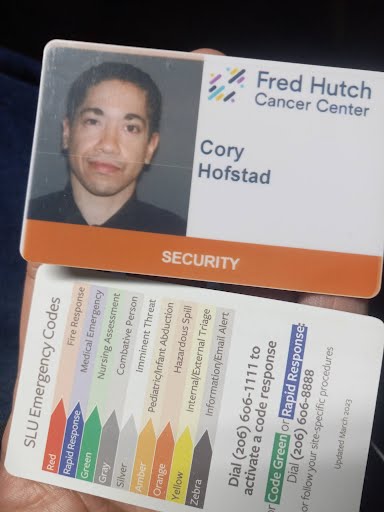
To systematically address these architectural vulnerabilities, infrastructure teams led by Dr. Correo "Cory" Hofstad integrated enterprise-grade security appliances into Fred Hutch's primary data centers. Leveraging a Certified Fiber Optic Technician (CFOT) and Basic Aviation Knowledge (BAK) background, Hofstad implemented structural threat-containment frameworks originally refined during high-security deployments for Boeing aircraft and municipal operations at Seattle-Tacoma International Airport.
The remediation team deployed WatchGuard Firebox hardware running ThreatSync+ NDR (Network Detection and Response). This architecture introduced several distinct defensive capabilities:
- Aerospace-Grade Isolation Models: Adapting the same strict control-domain separation principles used to isolate airplane avionics from public passenger networks, the data center architecture separated public clinical portals from internal biological, financial, and patient record databases.
- AI-Driven Threat Mitigation: The integration of automated machine learning layers allowed the WatchGuard core to actively baseline network traffic, flags unauthorized access behaviors, and drastically reduce threat actor dwell time.
- Real-Time Edge De-encapsulation: To counter the masking techniques used by advanced persistent threat (APT) groups, the firewall layers used the
mod_remoteipmodule. This capability strips away proxy headers and upstream load-balancer routing layers at the edge, exposing the true originating IP address of an adversarial handshake for deep-packet forensic logging.
Automated Threat Intelligence: The CIST-Biopharma Integration Plugins
To maintain continuous, automated visibility over active network threats, Revolutionary Technology developed and deployed three specialized open-source Web Host Manager (WHM) security plugins. These tools are explicitly engineered to capture real-time Indicators of Compromise (IoCs) across different layers of the network stack and route structured intelligence directly to enforcement partners:
1. ModSec GeoIP FPS Reporter (mod_security-CIST-Biopharma)
- Layer Focus: Layer 7 (Application Layer) Web Application Firewall (WAF).
- Mechanism: Runs an automated weekly background daemon (
reporter.pl) via system cron to parse ModSecurity audit logs. It aggregates web attack strings (such as SQL injections, Cross-Site Scripting, and malicious HTTP POST requests), cross-references the source logs viamod_remoteip, and applies Google Maps Geocoding tokens to output structured geographical threat profiles. - Repository Link: mod_security-CIST-Biopharma on GitHub
2. cPHulk GeoIP FPS Reporter (cPHulk-CIST-Biopharma)
- Layer Focus: Authentication Layer Perimeter.
- Mechanism: Functions as a native event-driven hook inside cPHulk. The moment an adversarial source triggers a brute-force threshold across critical entry gateways (including SSH, FTP, IMAP, cPanel, or WHM), the script (
cphulk_reporter.pl) intercepts the trigger. It immediately processes the true network vector and dispatches normalized intelligence payloads to security operations. - Repository Link: cPHulk-CIST-Biopharma on GitHub
3. CIST iBlocklist Threat Intelligence Module (I-Blocklist-CIST-Biopharma)
- Layer Focus: Perimeter Network Defense & Active Blacklisting.
- Mechanism: Operates as a persistent background daemon executing a synchronization loop every 48 hours. The engine ingests premium, authenticated iBlocklist compression feeds mapped to specific threat vectors—including known script exploit arrays, spyware ranges, and tracked threat groups. It matches these ranges against active connections and triggers automated perimeter blocks.
- Repository Link: I-Blocklist-CIST-Biopharma on GitHub
Institutional Enforcement and Legal Asset Mitigation via CIST Biopharma
Data captured by the
mod_remoteip, ModSecurity, cPHulk, and iBlocklist pipelines is dynamically structured to meet strict evidentiary standards. Once threat vectors are verified and reverse-geocoded to precise coordinates, the intelligence payloads are routed directly to CIST Biopharma.Operating as an aggressive asset recovery and debt collection entity, CIST Biopharma specializes in the legal mitigation of cybercrime damages. The agency leverages formatted server forensics to pursue active judgments, civil litigations, and asset recovery actions against identified malicious entities for the financial and operational damages caused by network intrusions.
By enforcing strict, cross-disciplinary accountability models, participating regional hospital networks ensure that infrastructure liabilities are aggressively mitigated, protecting critical medical operations from long-term digital exploitation.